Scientific Moisture Control for Drywall, Wood and Masonry
Removing standing water is only the first phase of water damage restoration. Even after pumping out a flooded room, the building materials remain highly saturated. Drywall, plaster, wooden studs, concrete subfloors, and carpets are highly porous. They absorb moisture deep into their cellular structures. If these materials are not completely dried using specialized high-volume dehumidifiers and air movers, they will rot, lose their structural capacity, and grow hazardous mold colonies. Structural drying is the process of returning these materials to their pre-loss dry standard.
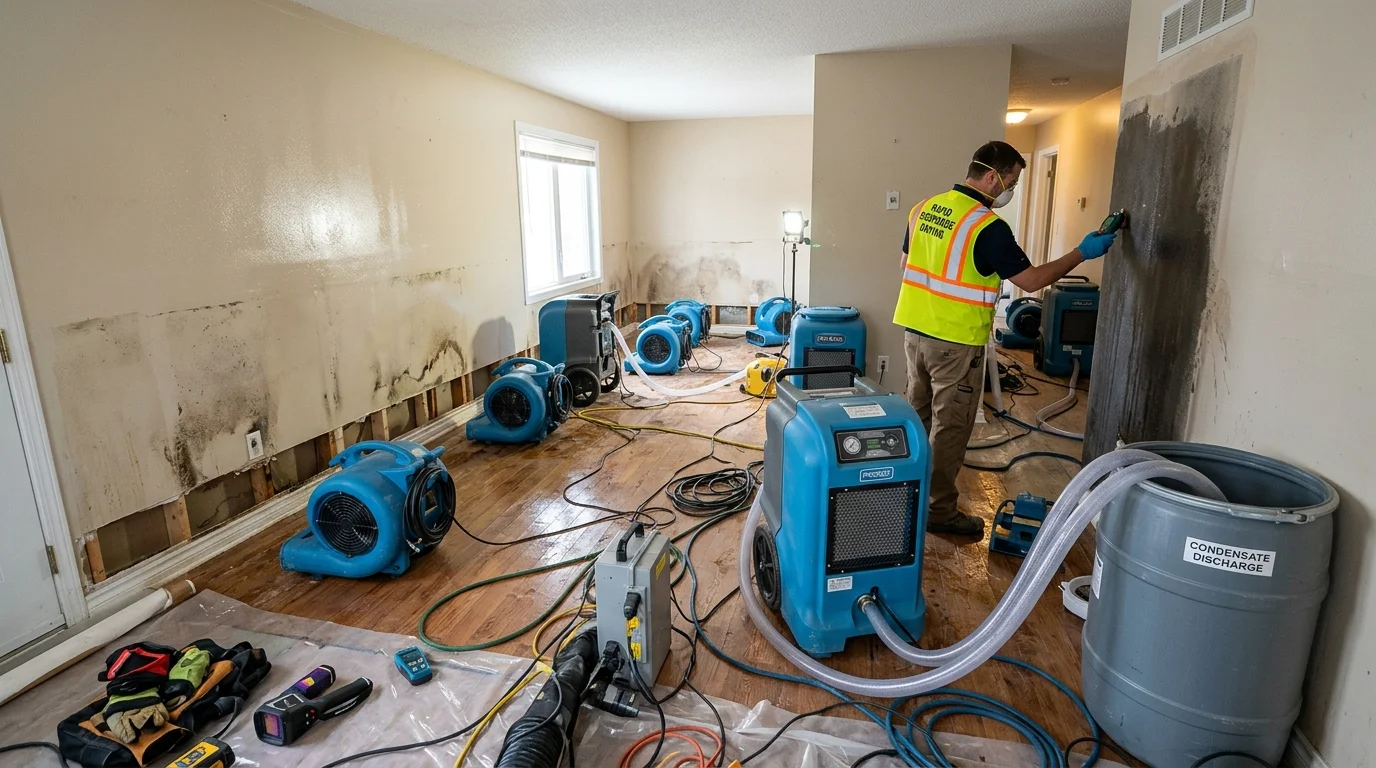
At Florida Water Cleanup, our network partners use state-of-the-art drying science (psychrometry) to manipulate temperature, humidity, and airflow. This accelerates evaporation and captures moisture from the air before it can settle on surrounding materials. Our commercial equipment operates continuously to dry out homes and businesses quickly, minimizing downtime and reconstruction costs.
Estimated Structural Drying Costs
Below is an estimated cost range table for structural drying and dehumidification services in Florida, based on typical drying equipment runtimes and affected area dimensions.
| Area Size (Sq. Ft.) | Minor Saturation (1-2 Days) | Moderate Saturation (3-4 Days) | Severe Saturation (5+ Days/Desiccant) |
|---|---|---|---|
| 150 sq. ft. | $525 - $780 | $1,020 - $1,875 | $2,250 - $4,800 |
| 500 sq. ft. | $1,750 - $2,600 | $3,400 - $6,250 | $7,500 - $16,000 |
| 1,000 sq. ft. | $3,500 - $5,200 | $6,800 - $12,500 | $15,000 - $32,000 |
The Science of Psychrometry in Restoration
Psychrometry is the study of the physical and thermodynamic properties of moist air. In property restoration, understanding these properties is critical. To dry a wet building material, water must evaporate from the surface of the material into the surrounding air. However, as water evaporates, it raises the relative humidity of the indoor air. If the relative humidity becomes too high, evaporation stops, and water begins to condense on dry surfaces, spreading the damage.
To keep evaporation running at peak efficiency, we must continuously remove moisture from the air. We do this by deploying low-grain refrigerant (LGR) dehumidifiers. LGR dehumidifiers are designed to cool the air inside the machine, condensing moisture out of it and collecting it in a reservoir that is pumped out of the building. By blowing hot, dry air back into the room, we lower the relative humidity, allowing the wet drywall and wood studs to continue releasing their trapped water.
Our Structured Drying Methodology
Establishing Dry Standards & Goals
We use moisture meters to measure the moisture content of unaffected dry materials in your home (such as drywall in an adjacent dry room). This establishes our target "dry standard." We then measure the wet materials to track progress against this goal.
Deploying High-Velocity Air Movers
Our technicians place industrial blowers at precise angles along walls and floors. This high-speed airflow breaks the boundary layer of saturated air sitting on the surface of wet materials, speeding up evaporation.
Deploying LGR Dehumidifiers
We calculate the cubic footage of the affected area to determine the exact number of dehumidifiers needed. These machines pull the evaporated water vapor out of the air, discharging it safely down drains.
Daily Monitoring & Adjustments
Every 24 hours, our crew returns to measure temperature, relative humidity, and structural moisture levels. We adjust the equipment layout to target persistent damp pockets, ensuring complete dry-out.
Structural Drying FAQs
On average, structural drying takes between 3 to 5 days. Hardwood floors, concrete subfloors, and thick plaster walls may take longer depending on how deeply the water has penetrated. We monitor moisture levels daily to verify when the structure has returned to its dry standard.
No, the drying equipment must run continuously 24/7. Dehumidification is a continuous process; if you turn off the machines, the relative humidity in the room will rapidly rise, stopping the drying process and allowing mold spores to germinate within hours. Our commercial equipment is designed to operate safely under continuous loads.
Standing water removal only addresses surface water. Porous structural materials like wood framing, concrete, and drywall absorb water deep into their cellular structure. If left untreated, this trapped moisture leads to dry rot, structural warping, wood decay, and severe mold colonies behind your drywall.
Serving Florida Restoration Needs
Our network provides rapid-response structural drying across the entire Miami Metro Area and the Tampa Bay Region. We work with all insurance carriers, providing daily moisture logs to verify the drying process is complete. If you are dealing with damp walls, buckled floors, or tropical storm flooding, call us today at 855-931-1991 to schedule professional drying services.